
The Permian region’s marketed natural gas production grew from 17.2 billion cubic feet per day (Bcf/d) in 2021 to 27.6 Bcf/d in 2025, a 60% increase, according to data from our latest Short Term Energy Outlook. Over the same period, crude oil production grew by 39%, going from 4.7 million barrels per day (b/d) to 6.6 million b/d. The higher growth in natural gas production is the result of increasing gas-oil ratios (GOR).
As more oil and natural gas are produced, pressure within the reservoir declines; natural gas is easier to produce at lower pressures and the GOR increases.
In 2021, the Permian produced 17.3 Bcf/d of natural gas and 4.7 million b/d of crude oil, and the GOR averaged 3,628 cf/b. If the GOR had remained the same as in 2021, the Permian region would have produced only 23.8 Bcf/d of natural gas in 2025, 14% less than actual production that year. The extra 3.8 Bcf/d of gas in 2025 comes because of this higher GOR.
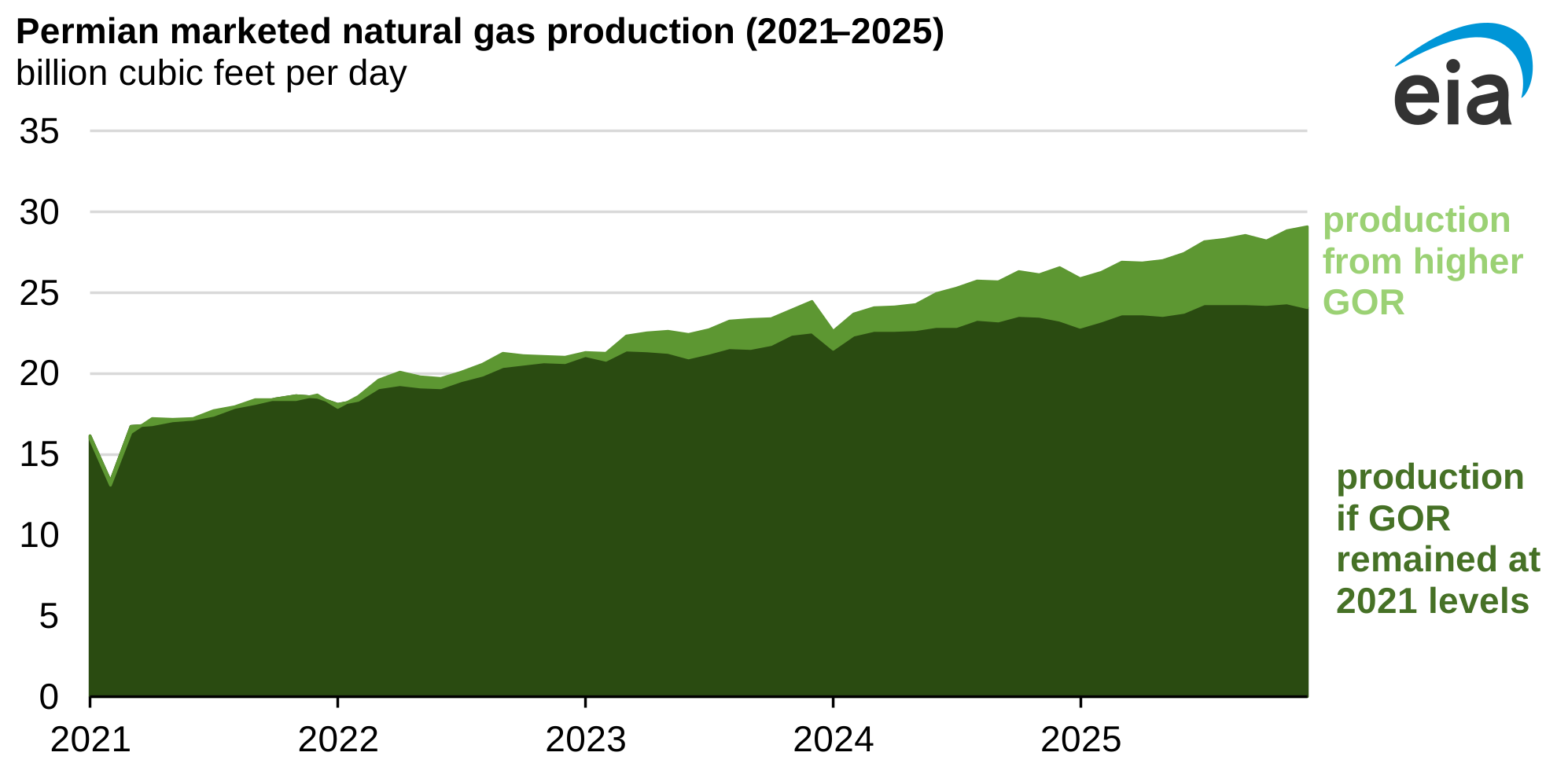
Note: GOR is the gas-oil ratio, measured in cubic feet of natural gas per barrel of crude oil produced.


