
In 2020, total U.S. energy consumption fell to 93 quadrillion British thermal units (quads), down 7% from 2019, according to EIA’s Monthly Energy Review. Last year marked the largest annual decrease in U.S. energy consumption in both percentage and absolute terms in our consumption data series that dates back to 1949. Much of the 2020 decrease in energy use is attributable to economic responses to the COVID-19 pandemic that began in the United States during the spring of 2020.
Before 2020, the largest recorded annual decrease in U.S. energy consumption occurred between 2008 and 2009, when consumption decreased by 5% during the economic recession. Other large annual decreases in U.S. energy consumption occurred during economic recessions in the early 1980s and in 2001.
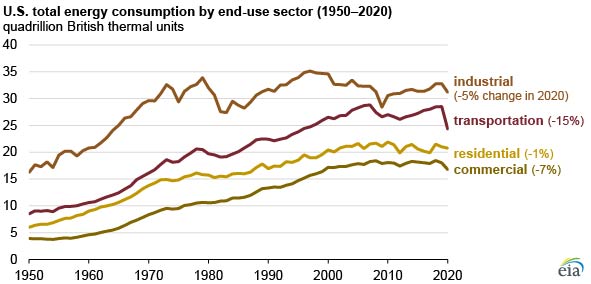
Commercial: In 2020, energy consumption by the commercial sector of the U.S. economy fell by 7% to less than 17 quads. Closed offices and businesses, work-from-home orders, and relatively warmer winter weather contributed to less commercial energy consumption. U.S. commercial natural gas consumption dropped by 11%, and electricity retail sales to the commercial sector fell by 6%.
Industrial: In 2020, consumption of energy in the U.S. industrial sector fell 5% to 31 quads. With decreased U.S. demand for many products during 2020, the energy-intensive industrial sector produced less crude oil and natural gas and, therefore, consumed less energy to produce, refine, and process those products. Consumption by U.S. industry of every major source of energy declined: use of coal fell by 16%, of petroleum by 4%, and of natural gas by 2%. Retail sales of electricity to industry fell by 8%.
Residential: In 2020, consumption of energy in U.S. residences fell by only 1% to less than 21 quads. With people spending more time in their homes because of various stay-at-home orders during 2020, sales of electricity to the U.S. residential sector increased by 2%. However, 2020 was a relatively warm year, which led to less energy consumption for home heating. U.S. residential consumption of biomass (mostly wood), fell by 16%, petroleum by 11%, and natural gas by 7%.


