SRECTrade’s turnkey solution helps fund Lazer Spot’s continued deployment and operation of zero-emission yard trucks using renewably generated electricity
Lazer Spot announced its partnership with SRECTrade to advise and manage the company’s environmental commodities as part of further accelerating Lazer Spot’s long-time drive to reduce vehicle emissions. As the leader in the spotting industry Lazer Spot has reduced emissions for years, operating 100% electric yard trucks since 2017. Informed by these early trials, Lazer Spot has accelerated the deployment of 100% electric yard trucks aided by SRECTrade’s work to optimize funding provided by environmental commodity programs like California’s Low Carbon Fuel Standard (LCFS).
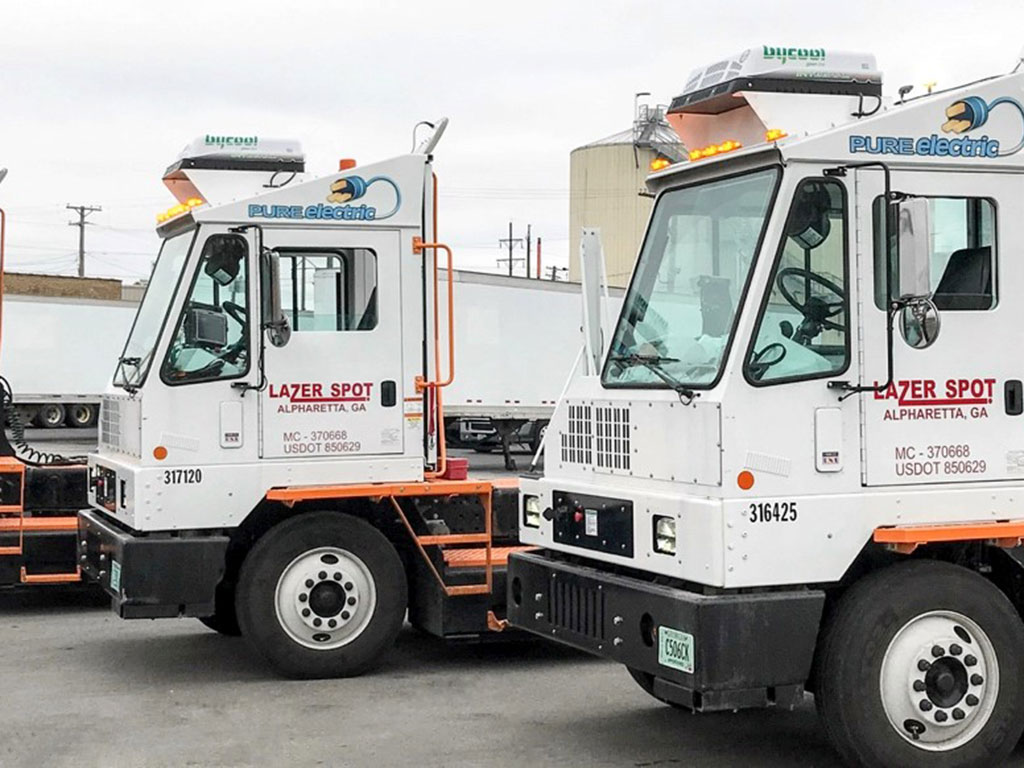
SRECTrade’s ability to source renewably generated electricity to power electric trucks is a key part of Lazer Spot’s sustainability strategy. “We wanted a turnkey solution from a partner that could help educate, advise and operationalize these tough new regulatory programs,” said David Stringer, Vice President of Innovation at Lazer Spot. “We also recognized that with our scale, we must leverage every resource to make the tech more affordable, approachable and ultimately more sustainable for our customers and the communities in which we operate - the very same communities in which we live.”
Stringer noted that the transition to EVs has been cost effective and beneficial in many ways. The zero-emission vehicles have led to more efficient workdays, safer working conditions, and greater employee retention. Stringer reflects on Lazer Spot’s transition to renewable energy, saying, “there doesn't have to be a compromise.” It’s a win for everyone: employees, customers, the environment…and the bottom-line.
SRECTrade advises on and manages Lazer Spot’s environmental commodity portfolio maximizing benefits from complex clean fuel and renewable energy programs - both financial and strategic - as the firm accelerates efforts to decarbonize across its network. Lazer Spot plans to deploy over 30 trucks by the end of 2021 with a goal to get to 100 trucks in 2022.


