
If indeed history repeats itself, and the next three quarters of a century is as good to Georgia ports and their customers as the Georgia Ports Authority’s first 75 years, GPA leaders have plenty about which to be enthused.
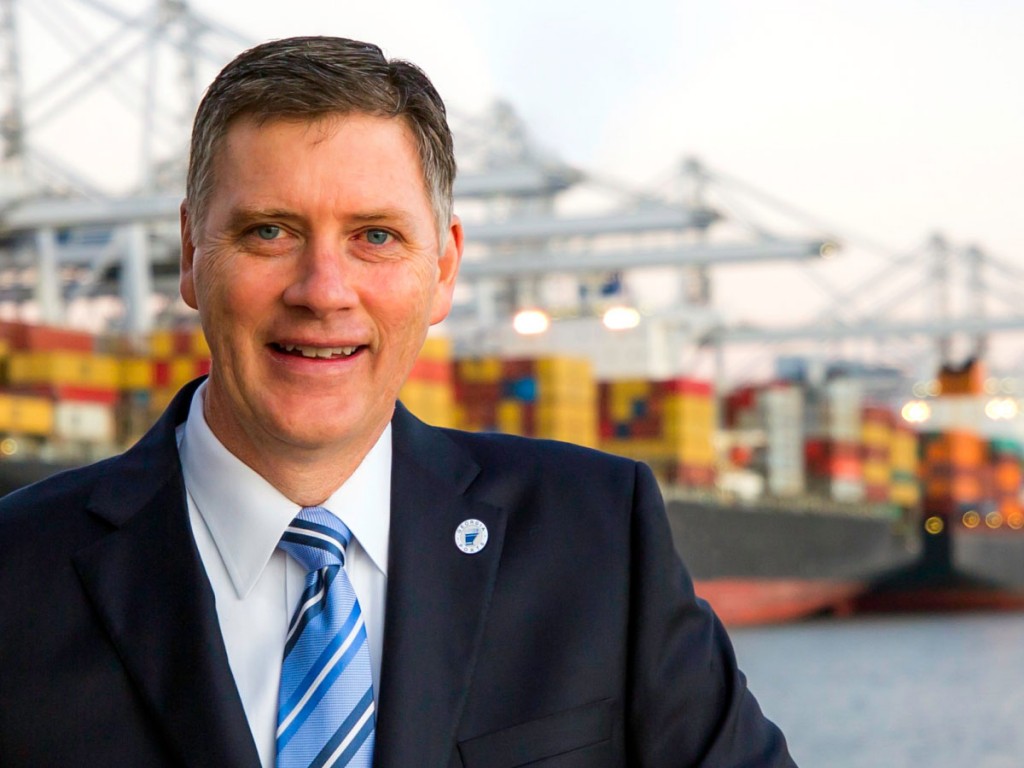
Griff Lynch, the GPA’s executive director, tells AJOT that plans – including soon-to-be-completed channel deepening and multiple new container terminals – are continuing to advance to ensure Georgia ports evolve and innovate to stay ahead of the proverbial pack for generations to come.
Citing ocean carrier decisions as far back as the early 1970s to call Savannah due to the port’s presence of big-box retailer distribution facilities, Lynch commented, “History repeats itself. We’re still kind of building off the same formula that started back in 1973.
“Of course, big-box retailers exploded in the late ’90s and early 2000s, but the model really started many, many, many years ago, and that’s what kicked it off for Savannah,” he said. “And a beautiful thing was these imports brought in the containers to service exports.
“That’s what got us on the map initially,” Lynch continued. “When we look forward for the next 75 years, we want to make sure we continue to grow off this incredible story that we’ve built over the past several decades.
“The ‘Savannah model’ has been a team effort over those 75 years,” he said. “It’s been the Georgia Ports Authority, the ILA [International Longshoremen’s Association], all the retailers and exporters, all of our customers, the trucking community and now, more than ever, the developers developing the facilities outside our gates to ensure we have the capacity to grow. “We recognize that, and we are so appreciative of everybody stepping up to the plate over the years,” he continued, “and we are going to continue to need that support to move forward. We cannot do it without them.”
Value Proposition Key
“When we look forward at where the growth is coming from, Savannah is a very similar story to what it was 40 or 50 years ago,” Lynch said. “If you just look at the recent history with containers, the ports that can provide the lowest cost and best value proposition are going to have the greatest chance of success.
“Our goal is to stay focused on that,” he added, “and our value proposition will remain that we want to continue to develop a balanced market. We’ll see the export mix evolve. We have the Georgia base, with the clay and forest products, but now we’re starting to introduce the pellets and the resins.
“Several million square feet of resin business will start moving through our ports this coming year and the year following,” Lynch said, pointing to separate recent agreements with A&R Logistics and Plastic Express. “Even five, six, seven years ago, no one would have anticipated this business coming through Georgia or the Southeast.”
Lynch said another area of focus will be workforce development, commenting, “We’re going to continue to grow the workforce that we hire directly from the local high schools and the regional schools to develop talent. We want to give the local people in Savannah a strong future where their home is.”
The GPA, he said, also is committed to transparency in providing full visibility of cargo movements, including before and long after shipments are on port terminals, with technology to bring about greater cargo transparency being rolled out this year.
In addition, the GPA is concentrating on handling increasing e-commerce activity, Lynch said, adding, “It’s no secret for any port operator that the folks who can handle e-commerce the best are going to give themselves the greatest chance for success, at least in the near future.”
Lynch said e-commerce now represents between 12 percent and 15 percent of retail sales, not counting gasoline, but that share is anticipated to grow to more than 20 percent by 2025.
“How do we ensure that we are the preferred port for e-commerce moving forward?” he asked rhetorically.
Team Commitment Crucial
Lynch said he believes the GPA’s team of port professionals is particularly critical to sustained success.
“I think what’s going to allow Savannah to stay at the top, first and foremost, is the team,” he said. “Here at the Georgia ports, we recognize that we’re really truly only as good as our last act or our last vessel worked and our last customer served. So, at the end of the day, we have to continue to redefine ourselves.
“We can’t get comfortable with thinking we are among the best,” he said. “We have to work hard to earn that each and every day, and that means making some painful decisions. Sometimes you have to go through growing pains to maintain that status.”
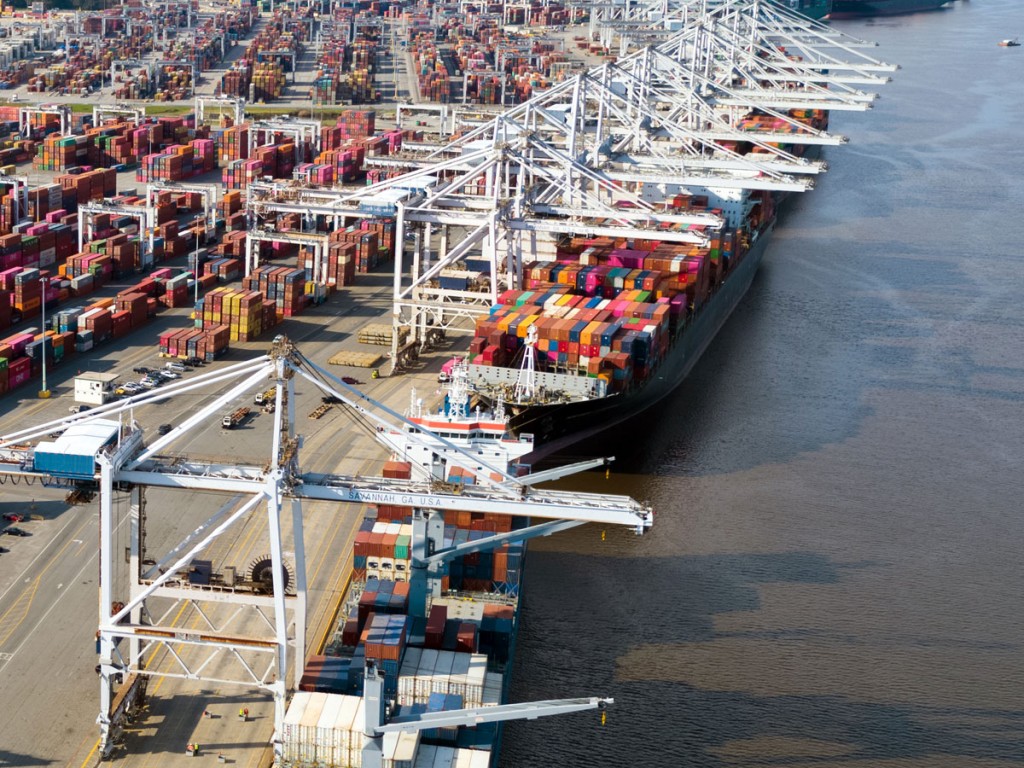
For example, Lynch noted a recent initiative to begin moving Port of Savannah containers through Ocean Terminal in addition to the 1,200-acre Garden City Terminal, thus helping facilitate completion of infrastructure enhancements at the latter installation, already North America’s largest single container terminal, while minimizing potential disruptions for customers.
“We’re going to expand capacity even more, make the changes we need to make and then bring the volume back in,” Lynch said.
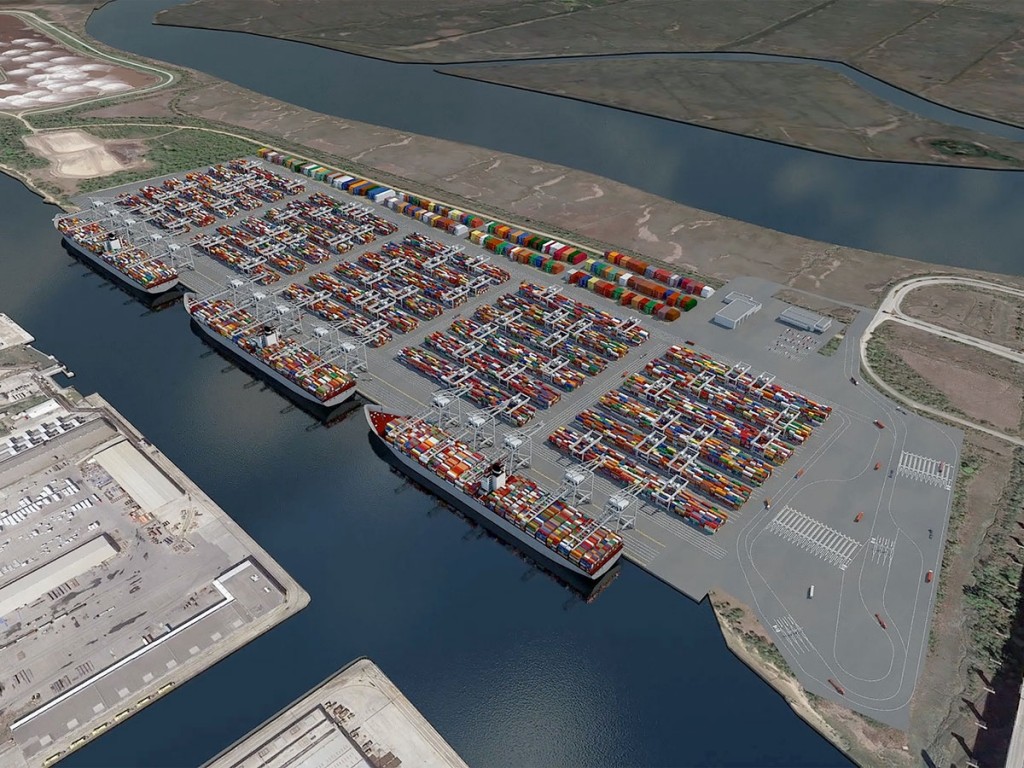
“I think the other really exciting thing is the new Savannah Container Terminal that will be built on Hutchinson Island,” Lynch said, referring to a 200-acre site across the Savannah River channel from the GPA’s Ocean Terminal. “That project is going to really get under way this year.”
Lynch said the permit development process for the Hutchinson Island facility has begun, adding, “By 2025, I would love for us to have the first phase of that Savannah Container Terminal opening up. That is to make sure we can secure not only the big ships but also continued growth of our customers.”
He said the GPA’s longer-term strategy, for after the Hutchinson Island facility is built and Garden City throughput is maximized, calls, in the 2040 timeframe, for joint pursuit along with the South Carolina Ports Authority of development of an all-new deepwater containerport, dubbed Jasper Ocean Terminal, farther up the Savannah River in Jasper County, South Carolina.
Vision Must Evolve
“When you talk about 75 years out, boy, that’s going out a long way,” Lynch said, “but, for a 75-year picture, the key there is going to be making sure, like the forefathers of Georgia did, that we set a vision for the future of the Georgia ports and the state of Georgia. We have to make sure we’re making the right investments infrastructure-wise to support the business.”
A prime example is the $1 billion Savannah Harbor Expansion Project, to deepen the port channel to 47 feet by 2021.
While that endeavor should help attract additional larger containerships to call the port, efforts continue to enhance how that cargo moves inland, including the $200 million Mason Mega Rail Terminal to open this year at Garden City Terminal. Also, with ongoing trucking capacity shortages, the GPA’s inland port model is expected to further expand while the authority also will likely have to look at how to accommodate driverless trucks.
“We have to be willing to continue to innovate and evolve and not get locked into the way things are done today,” Lynch said. “That’s always the key with any company, and that will be the key for the Georgia Ports Authority. We’re not going to rest on our laurels.
“We have a wonderful model here at the Georgia Ports Authority,” he said, “and that model has been very successful over the years because of the board that we have and the state support that we get. Both our state representatives and our federal legislators are supremely focused on the Georgia ports. We know we couldn’t do it without them and we need that moving forward.
“The key to our success, ultimately, if you really want to boil it down, for the next 75 years is that, if the team sticks together, we can do anything.”


