
Ports of the mid-Gulf area encompassing Mississippi and Alabama are augmenting facilities with additions of varied infrastructure befitting of the broad-ranging nature of the region’s commerce.
From an ocean resources center in Gulfport to a wood pellets export facility in Pascagoula to a vehicle terminal in Mobile, the current undertakings span a wide spectrum of functions.
Mississippi State Port Authority
Quickly becoming a microcosm of South Mississippi’s economy with shipbuilding, manufacturing, tourism, education and cargo operations, the Mississippi State Port Authority’s Port of Gulfport continues to grow its diverse business mix after completion of its federally backed restoration following 2005 destruction by Hurricane Katrina.
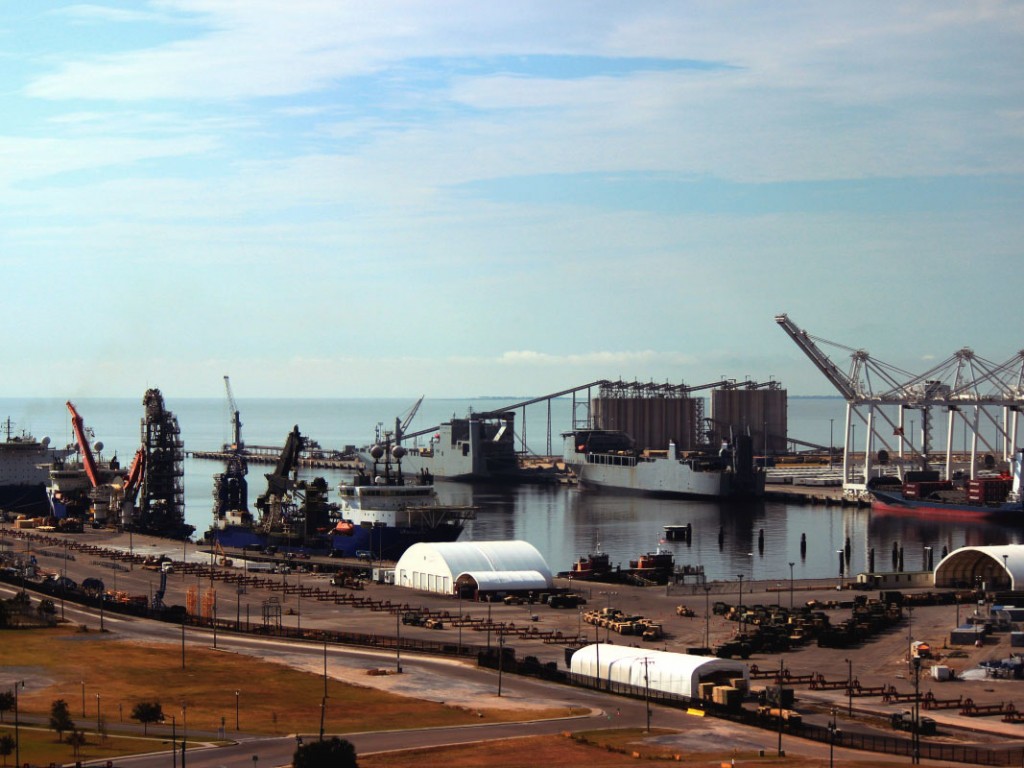
Late 2019 saw groundbreaking for the Roger F. Wicker Center for Ocean Enterprise, a 62,000-square-foot installation targeted for completion in 2021 as the catalyst for Mississippi’s “Blue Economy.” The center is projected to house facilities of the U.S. Navy, National Oceanic and Atmospheric Administration and private-sector businesses associated with water-based unmanned systems, as well as facilitate expansion for The University of Southern Mississippi’s School of Ocean Science and Engineering, which currently occupies the port’s Marine Research Center.
Utilization of the Port of Gulfport by the military continues at a solid pace, with the past year seeing the port serve as the site for a joint readiness exercise of the U.S. Army Forces Command. As one of 17 U.S. strategic ports, Gulfport looks to sustain scheduling for such activities, augmenting strong commercial throughput.
The MSPA remains in the process of working through development of an operating agreement with Turkey-based Yilport Holdings, which operates in more than 20 terminals throughout the world but none yet on U.S. soil. Yilport is currently engaged in the Committee on Foreign Investment in the United States process, with projected completion of the application review expected in the second half of 2020.
Port authority officials believe an agreement with Yilport would launch Gulfport’s next stage of expansive growth in facilities and cargo offerings, bringing new routes and delivering more options for shippers. Leadership also is looking to advance the port’s cruise industry status.
Port of Pascagoula
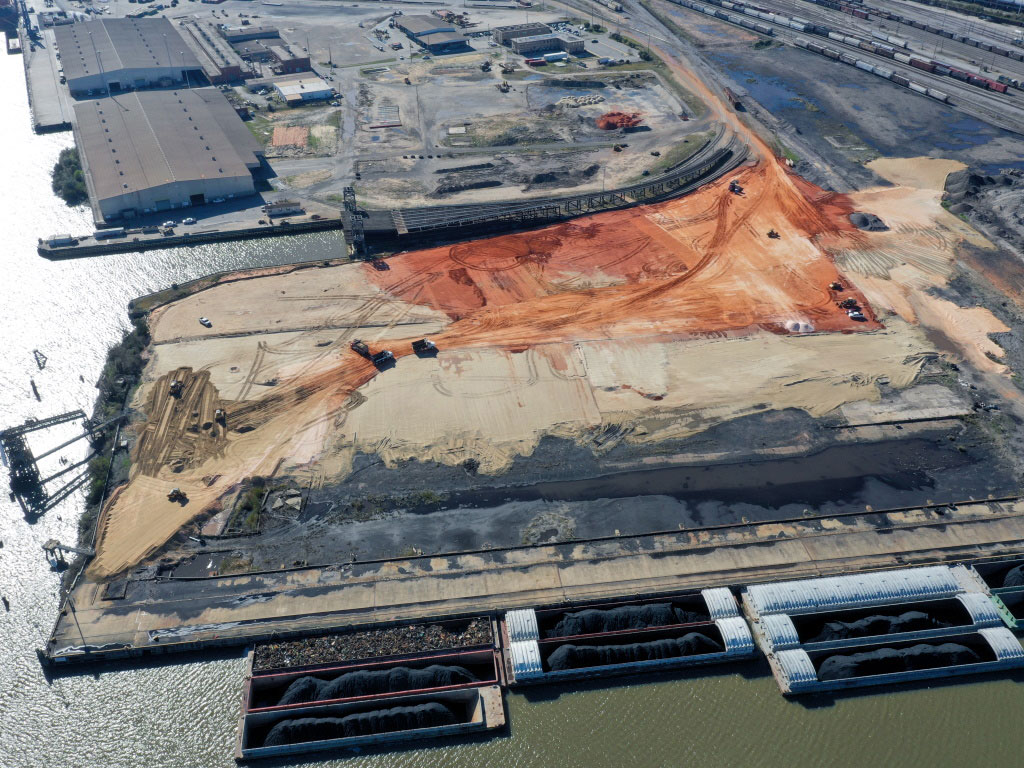
Also in Mississippi, about 40 miles east of Gulfport, near the Alabama line, the Jackson County Port Authority’s Port of Pascagoula looks to build upon its legacy of forest products shipment prominence with addition of a deepwater export facility of Enviva Holdings LP, the world’s largest producer of industrial wood pellets, a globally popular clean energy source. Construction began in January on a multidomed wood pellets export terminal in the port’s Bayou Casotte Harbor, as well as on an Enviva production plant in Lucedale in neighboring George County, with each expected to take 15 months to bring to completion.
Meanwhile, a major rail project is nearing completion at the Port of Pascagoula. That undertaking involves a new interchange yard and 3 miles of fresh tracks for the Mississippi Export Railroad short line, to provide a north-south connection, including unit train capabilities, linking to CSX and Canadian National lines.
In addition, improvements continue at Pascagoula’s South Terminal. A bulkhead rehab and repair project is getting under way at the terminal, which has an 825-foot berth supporting operations on a 50-acre site.
Alabama State Port Authority
The Alabama State Port Authority’s Port of Mobile has completed a 400-foot dock extension at its container-handling facility, operated by APM Terminals, allowing simultaneous berthing of two post-Panamax vessels. The extension was part of a $50 million, third-phase expansion adding 20 acres of new yard space, fender upgrades and additional outbound gates at the container terminal.
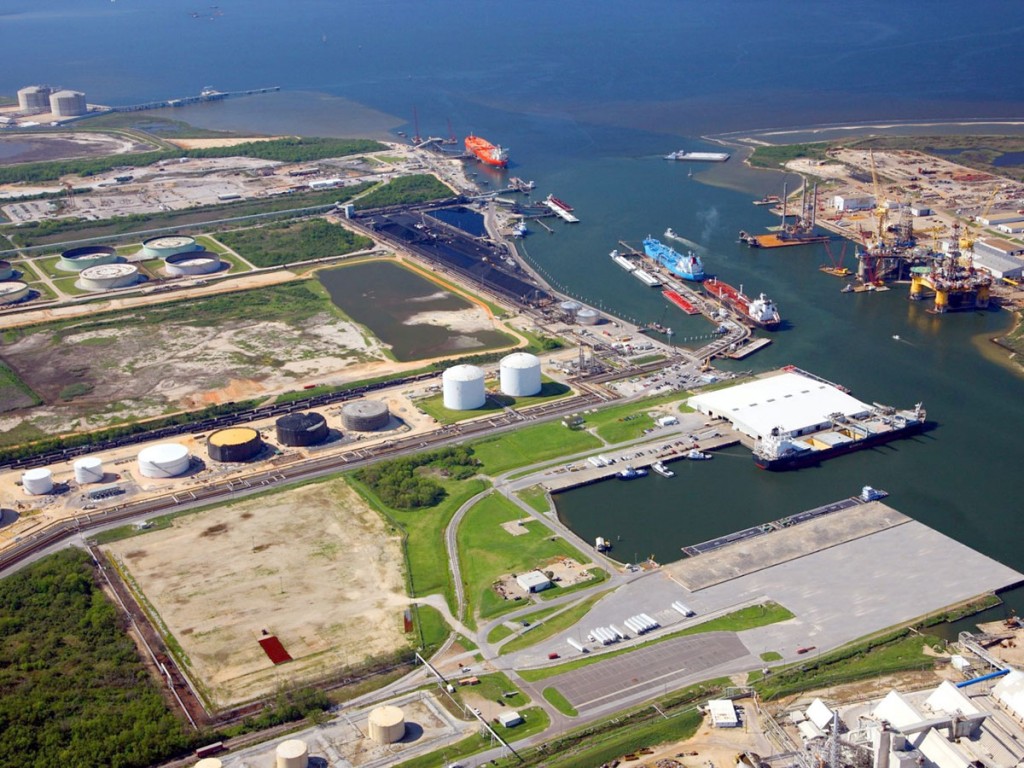
The container terminal, as well as two other lower harbor Port of Mobile terminals serving steel and coal shippers, are to soon have alongside depths lowered by 5 feet to 50 feet as part of a $274.3 million channel deepening and widening endeavor. The U.S. Army Corps of Engineers is to let contracts later this year for the project, which is advancing with federal and state funding.
Early this year, the ASPA and AutoMOBILE International Terminal – a joint venture of interests based in Argentina and Chile – signed a concession agreement for a $60 million, 57-acre finished automobile roll-on/roll-off terminal at the port’s main multimodal complex. Its annual throughput is designed to be 150,000 units. Construction is under way, with completion scheduled for early 2021.


