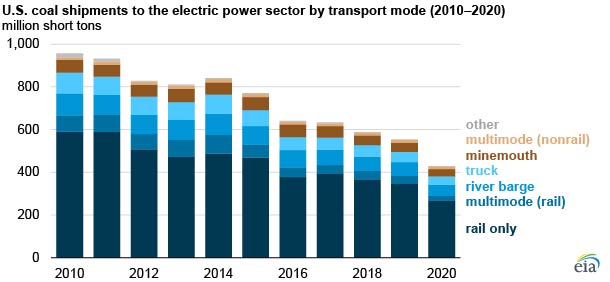
The U.S. electric power sector received 428 million short tons (MMst) of coal in 2020, the lowest annual level for that sector since we began publishing this data in 2007. U.S. coal shipments were down 22% in 2020 from 2019 levels, driven by lower overall electricity demand due to responses to the COVID-19 pandemic and the continued decline in U.S. coal-fired capacity and generation. More than two-thirds (67%) of the coal that was delivered to the U.S. electric power sector in 2020 was shipped either completely or in part by rail; the remainder was shipped by river barge, truck, or other methods.
Plant location—whether the plant is located close to a river, railway, or the supplying coal mine—and the cost-efficiency of the shipping method largely determine the primary way a power plant receives its coal. Although river barge is often the most cost-effective method of transporting large quantities of coal over long distances, river barges are limited to the relatively few coal-fired power plants located on suitable rivers. Shipping by truck is only cost-effective for short-haul distances, and most coal mines are located far away from power plants and consumers.
Coal shipments by truck and coal received by minemouth plants (coal-fired power plants built near coal mines) declined less in 2020 than other transportation modes, falling by 18% and 19% from 2019 levels, respectively. Coal shipped by waterways fell 20% from 2019 levels. Rail shipments in all forms, including multimode, decreased the most, at 24%.
- The Powder River Basin (Wyoming and Montana)
- The Illinois Basin (Illinois, Indiana, and Kentucky)
- Central Appalachia (Kentucky and West Virginia)
- Northern Appalachia (Ohio, Pennsylvania, and West Virginia)


