Bottlenecks at Australia’s biggest wheat export terminals have opened up opportunities for innovators who are using lines of smaller ships and fleets of trucks to get more supplies onto global markets craving grain.
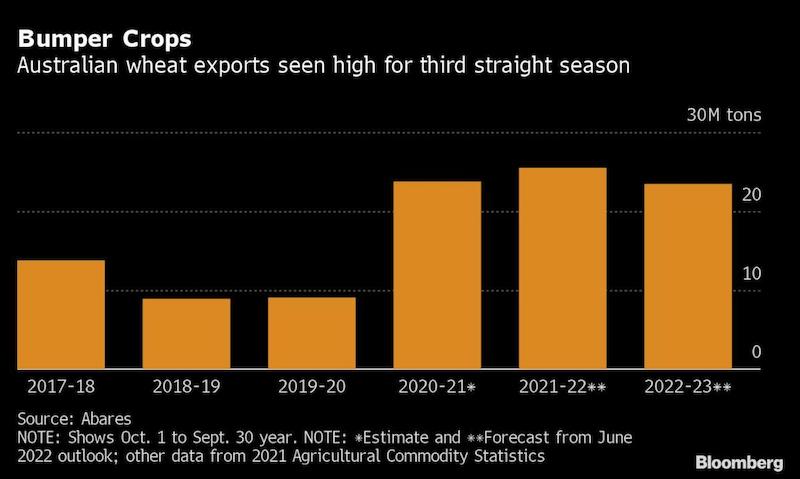
Two consecutive bumper harvests have stretched capacity at the nation’s major shipment terminals run by companies such as CBH Group, GrainCorp and Viterra. Now, with another large crop looming later this year, impatient exporters are increasingly turning to other ways of getting grain to market.
A flurry of operators have entered the Australian market to provide additional export capacity. One way involves transshipment companies using lighter vessels to ferry grain from shallow ports onto larger ships waiting out at sea. Another way has mobile ship-loaders using fleets of trucks to deposit grain on vessels, bypassing permanent loading facilities run by bulk operators.
“People are coming up with novel ways of getting around having to build permanent structures, and making them much more scalable,” James Maxwell, senior manager at Australian Crop Forecasters, said. “They’re a real standout, and they’ve really ramped up their exports over the last couple of years.”
The share of bulk grain exports shipped by non-bulk handling companies has jumped to 18% so far in the 2021-22 season from just 2% three years earlier, according to data from the Melbourne-based consulting firm.
Still, for the smaller operators to provide a significant boost to overall export capacity, more facilities will need to be built, Maxwell said by phone. While these companies may benefit now when capacity is stretched, they would have to compete with the scale of the heavyweight bulk handlers in the long-term. That raises questions over the viability of such projects, especially in years of drought when the country isn’t going to have a bumper crop, he said.
Meanwhile, the sheer pace of shipments this year continues to pile pressure on supply chains. With Australian exports expected to power through until the next harvest -- well past the end of the typical shipping season when ports undergo maintenance -- that could compound inefficiencies.
“When you’re running at capacity, the tiniest thing can throw everything out, particularly if you’re running at capacity for the entire year,” Maxwell said.