
Port of Olympia
The Port of Olympia is the southernmost deep-water port on Puget Sound. It handles breakbulk, project cargo and even live animal shipments.
The Port of Olympia also started the year with a new director. Late last year, Sam Gibboney was chosen to head the Port of Olympia. Gibboney was the executive director of the Port of Port Townsend for two years. Before that, she worked for San Juan County as director of community development, director of environmental resources and deputy director of public works. Gibboney began work Jan. 22, 2019 and will be paid $175,000 a year, according to the Port of Olympia release.
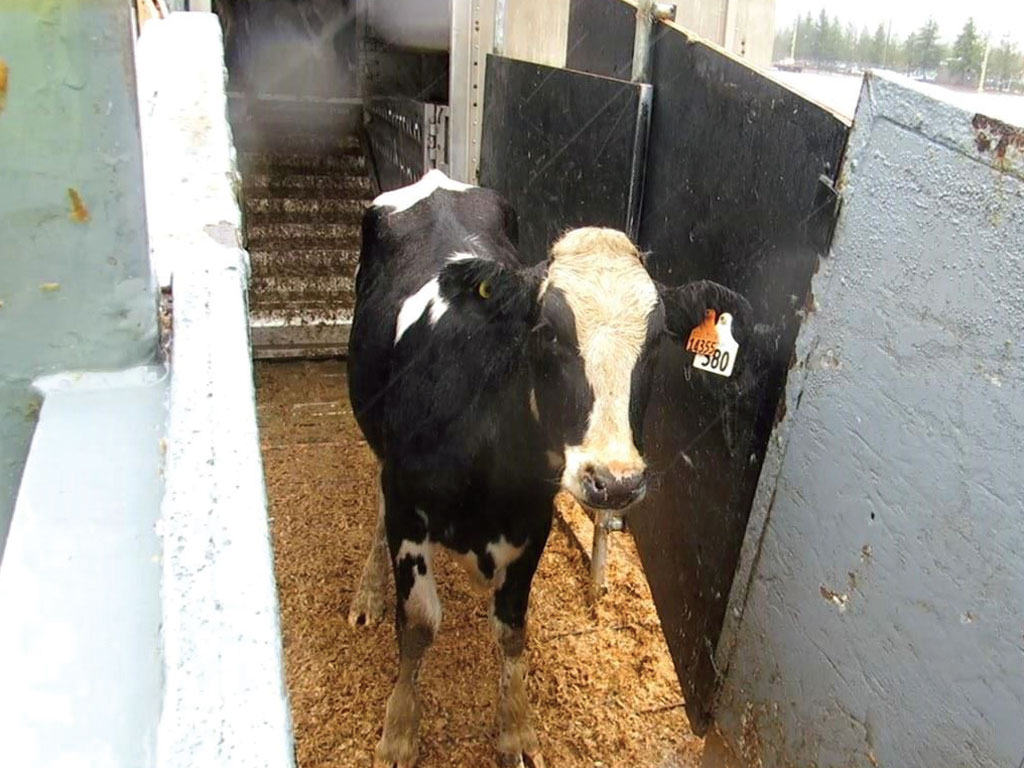
One of the type of shipments that makes the Port of Olympia standout as a breakbulk port is the movement of live animals. A great example happened during February 2019. The Devon Express made port during a heavy snowstorm to transport over 1600 cattle to Vietnam from ranches in California and Idaho.
The black and white Holstein cattle were loaded on trucks at ranches in California and Idaho for a trip to Schorno Agri-Business in Yelm. There they were given a final inspection by United States Department of Agriculture (USDA) veterinarians and were loaded up for a 40-minute trip to the Port of Olympia.
The cattle ship, the Devon Express, previously inspected by the USDA and loaded with bedding and feed at the Port took the cattle to Vietnam. The Holstein cattle will be used to produce milk for Vietnam, as well as serve as breeding stock to help build up their dairy industry.
Port of Longview
The Port of Longview’s Board of Commissioners passed an infrastructure focused budget which dedicates $10 million to rail expansion, berth revitalization and cargo handling investments. The Port of Longview’s Board of Commissioners’ 2019 Budget includes significant investments in the expansion of the Port’s Industrial Rail Corridor (IRC) and cargo handling infrastructure.

The IRC plays a critical role in the efficient movement of cargo throughout the region by connecting mainline rail directly with the Port. The expansion will add six additional tracks to the system, bringing the IRC to a total of eight tracks. This additional capacity will allow trains to move simultaneously, add storage for unit trains on sidings and accommodate the growing length of trains. Within the new budget, the Port plans to invest $800,000 towards permitting, environmental and engineering for the expansion. Additionally, the Port will pursue more than $200,000 in added upgrades to existing rail infrastructure within the Port.
Also in 2019, the Port will maintain its momentum on the Berth 4 Revitalization project.
Having recently completed the hazard mitigation assessment and demolition plan for the former Continental Grain silos, in 2019 the Port will conclude a vehicle and rail transportation analysis that will inform the movement of freight through the Port. The Port anticipates issuing a Request for Proposals for Berth 4 to interested parties in 2019.
On the cargo front, Commissioners approved upgrades to buildings and equipment that facilitate cargo handling on the waterfront. Improved bulk cargo environmental systems and controls make up much of the figure, which is rounded out by two new lift trucks to accommodate break bulk commodities.
Overall, the Port will invest approximately $10 million in infrastructure in 2019 and anticipates a strong year with operating revenues breaking $36 million.


