The unlikely convergence of a global pandemic and electric vehicle technology is driving delivery fleets to adopt electric vehicles at ever increasing rates. The coronavirus pandemic has reportedly caused a huge spike in package delivery. According to CNBC.com, UPS for instance, delivered up to 21.1 million packages a day in the second quarter of 2020, a nearly 23 percent jump in average daily U.S. volume from a year earlier.
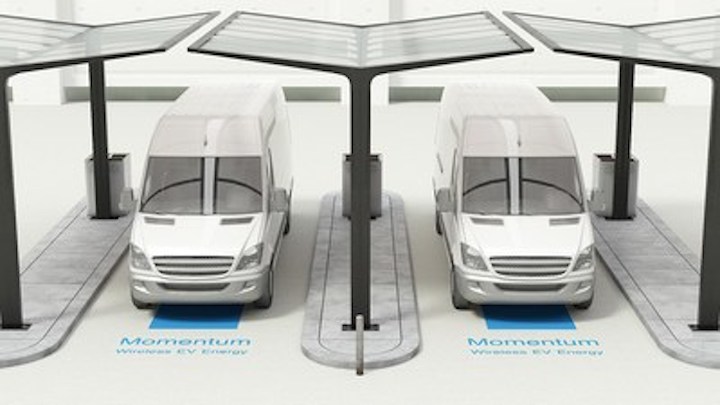
Electric Vehicle Outlook 2020 published by BloombergNEF, states that there are over 500,000 e-buses and almost 400,000 electric delivery vans and trucks on the road globally. All forecasts regarding electric fleet usage predict significant growth over the next decade. EV makers such as Arrival, Workhorse and Hyliion are all racing to produce delivery vehicles to meet the growing demand.
Several companies are moving to support this convergence: Momentum Dynamics Corporation, the global leader in high-power wireless charging for electric vehicles, and CEVT, an innovation company for Zhejiang Geely Holding Group based in Sweden, recently demonstrated high-power wireless charging on a passenger vehicle with autonomous parking. The demonstration highlighted autonomous parking combined with high-power autonomous charging in a commercially-available vehicle. This passenger vehicle demonstration proves the feasibility of charging electric vehicles automatically without the need for human attendance, who are then freed for other activities.
While environmental factors are an appealing aspect of EV fleets, with the significant demand being witnessed the most critical decision drivers for operators focus on fleet efficiency and operating cost-per-mile. It is now therefore more important than ever that fleet operators maximize their fleet utilization, while keeping costs low. Wireless charging is particularly effective in keeping vehicles in-service and the costs of charging infrastructure at a minimum. Cost savings in the use of wireless charging can come from a number of areas - Momentum Dynamics, for example, estimates it can cut a fleet operator's costs by one third with an efficient charging infrastructure that does not require cables or moving parts.
No doubt, the market for EV delivery vehicles will further develop as more vehicle offerings are available and the supporting charging and driving technologies continue their upward development.


