
Figuratively, and literally, the members of the ASEAN bloc are in the geo-political middle ground of the simmering trade war between China and the U.S.
The eleven nation ASEAN (Association of Southeast Asian Nations) bloc figuratively and literally occupies the geo-political middle ground in the trade dispute between the U.S. and China. The Southeast Asian group composed of the nations of Singapore, Thailand, Malaysia, Brunei, the Philippines, Indonesia, Thailand, Vietnam, Laos, Cambodia and Myanmar are by proximity and history within China’s regional sphere and through trade and geo-politics within the United States’ long shadow. So, it is with no surprise that with a Trumpian tariff tweet or Sino cryptic sign, ASEAN share markets – like the rest of the world - rise and fall with roller coaster regularity. It’s the new normal.
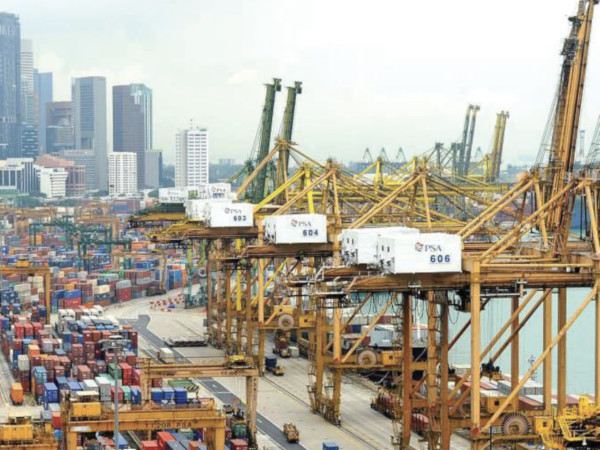
Perhaps, there is no movement poised to reset the geo-economic landscape more than China’s Belt Road Initiative (BRI) – an initiative People’s Republic of China (PRC) President Xi Jinping dubbed “project of the century.” For the ASEAN nations, the BRI represents both an enormous opportunity and an unprecedented threat.
Jeffrey Sng, Bangkok-based, a former banker and diplomat wrote in the ASEAN Miracle, “Geopolitical rivalries are the most obvious threat that ASEAN faces. In coming years, the Asia-Pacific region will see significant shifts of power, especially with the US giving up its position as the number one economy in the world to China by 2030 …Donald Trump’s mercurial nature could make things worse and increase the level of unpredictability in US/China relations. ASEAN will face great stress in the coming decades because of the heightened US/China rivalry.”
China has been ASEAN’s largest trade partner for nearly a decade – running at an estimated $520 billion last year. And unlike China’s trade with the U.S. and Europe, it is a relatively balanced trade with ASEAN exports nearly matching the Beijing’s exports. By contrast, the U.S. trade with ASEAN is less than half China’s total. And the withdrawal from the TPP (Trans-Pacific Partnership) and aggressive attitude towards trade partners has created uncertainty in ASEAN about what it can expect from Washington. Philip Bowring, Hong Kong-based, a long-time political and economic affairs writer with the Financial Times and International Herald Tribune said in an email summarizing the ASEAN’s quandary, “Until the US stops treating all major trade partners as actual or potential enemies, it will not find much regional traction for improving relations with ASEAN countries.”
What makes the trading relationship between the U.S. and ASEAN so murky is the combination of the impact of the President Trump’s tariff war with China (and others) along with the already changing patterns of trade in Asia. At this writing, the U.S. president has threatened to impose higher tariffs on $200 billion (section 301) in Chinese goods to the U.S. – despite warnings from all sides that the raising of tariffs will hurt U.S. importers and exporters.
But where does ASEAN fit in the dog fight between Beijing and Washington? Pretty much right in the middle. While ASEAN has to worry that it too may become a Trump tariff target – there is also an opportunity to benefit from the squabble, providing the fallout doesn’t spread too far.
At the recent opening of the 52nd meeting of the Asian Development Bank, Takehiko Nakao, ADB president, said the bank forecasted, “Southeast Asia will sustain growth at close to five per cent until next year.” But Nakao’s ASEAN predictions could be shortening the impact of shifting industrialization or conversely too optimistic with a U.S.-China dispute spill over.
As Joseph Incalcaterra, HSBC’s chief economist for ASEAN observed, “ASEAN countries stand to benefit from the China-US trade tensions. While the direct impact of higher tariffs is negative for all, the impact on the Association of Southeast Asian Nations is far less negative than for the rest of Asia as production and exports move from China to other countries.” Incalcaterra added the caveat, “However, export growth has slowed everywhere since the trade war started and there are few short-term signs that new production or export capacity is outweighing the downward momentum in exports caused by a slowing tech cycle and weaker global growth.”
The shift in manufacturing is borne out by both trade and investment figures between China and individual ASEAN nations. For example, in recent years China has been Vietnam’s largest trading partner and its second largest export market. The two nations have a “flexible” cross-border trade and investment policy that underscores this trading relationship (politically, there is still the South China Sea controversy creating enmity between the two). Similarly, China’s foreign direct investment (FDI) in Indonesia, Thailand and Malaysia has soared.
Malaysia gets off the China train
But there is an unsettling aspect to the BRI that is acutely felt in ASEAN. There is a sense that the BRI is a form of manifest destiny for China and everybody else is just along for the ride. Dr. Yu Jie wrote in the CIMB ASEAN Research Institute’s China’s Belt and Road Initiative (BRI) and Southeast Asia, “It may be unlikely that China will alter the BRI’s trajectory based on criticism and feedback from its neighbours. But Beijing must maintain a close understanding of how countries across Southeast Asia are reacting to the BRI, and respond to their concerns. The challenge for China going forward is as much about winning hearts and minds as it is showering dollars and pounds.”
The first real test for China has come in the form of project cancellations in Malaysia.
In January, Malaysia said it was canceling the $20 billion East Coast Rail Link (ECRL) with contractor China Communications Construction Co (CCCC).
At the media event, Malaysia’s Economic Minister Mohamed Azmin Ali said the project’s cost was too great, but softened the blow saying, Malaysia would accept investment from China on a case by case basis. “The cabinet has made this decision because the cost to develop the ECRL is too big and we don’t have (the) financial capacity,” said Azmin. The ECRL wasn’t the only China backed project dropped in the budget cutting, a natural gas pipeline in the East Malaysia state of Sabah was also scrapped.
Although the cancellation wasn’t totally unexpected – after the elections in May 2018, Prime Minister Mahathir Mohamad had said last August that the rail project would be cancelled – the project is a cornerstone for China’s BRI efforts in Southeast Asia. The U.S. China Economic and Security Review Commission in November of 2018 issued a report ranking the ECRL as the second-largest BRI project by estimated cost, only behind the $21.4 billion Moscow-Kazan high-speed railway project in Russia.
While the triangular relationship with the U.S. and China is a major concern, the inking of the Regional Comprehensive Economic Partnership (RCEP) trade agreement this year is overdue and important to framing ASEAN’s trade relations – sans the U.S. and China. The RCEP includes all ASEAN members: Brunei Darussalam, Cambodia, Indonesia, Laos, Malaysia, Myanmar, the Philippines, Singapore, Thailand and with the group’s free trade area partners Australia, China, India, Japan, New Zealand and South Korea. The RCEP’s senior officials are scheduled to meet in Bangkok to work out their differences in the goods and services segment of the agreement. Originally, it was thought the agreement would be signed in 2018 but lingering issues have dogged completion. If ASEAN and its RCEP partners can pencil in the trade agreement by year’s end, maybe the Bloc will have succeeded in something neither China nor the U.S. has – an improvement of relations with trade partners.


